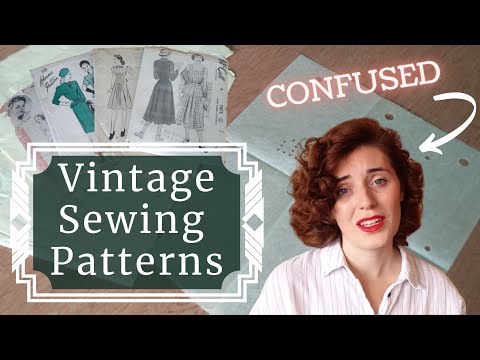
As I start work on my next 1940s sewing project, I thought I would take the time to talk about working with vintage sewing patterns.
Vintage patterns can be a challenge when you are used to modern commercial patterns or the super detailed instructions of independent pattern designers. But for that authentic vintage look vintage sewing patterns make all the difference so they are well worth the extra effort!
My Sewing with a Disability video that I mentioned at the end:
The vintage pattern I am using on the vintage pattern wiki:
If you enjoyed this video or found it helpful, please consider buying my a cup of coffee. This helps me to buy fabric and notions so that I can make more sewing videos for you! All contributions greatly appreciated:
Follow me elsewhere for more sewing inspiration:
Instagram:
Pinterest:
Etsy:
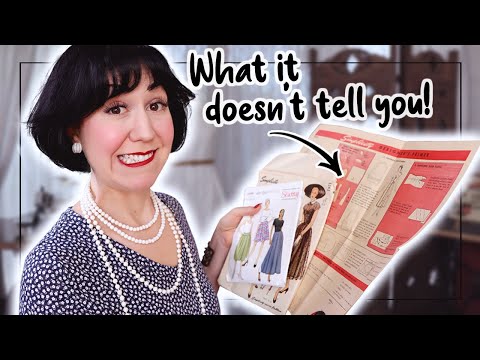
This just popped up in my feed. Lots of great info and retro RetroClaude.❤❤
Notes
– Vintage sizing is different from modern—choose patterns by bust (dresses/tops), waist (flat skirts), and hips (fitted skirts).
– Check that all pieces are there by comparing them to the diagram on the back of the envelope.
– Look at how much seam allowance is included.
– Measure the pattern pieces (accounting for seam allowance) and compare them to your measurements.
– Decode the perforations—some mark grainlines, darts, pleats, or indicate where to cut on the fold.
– Label each piece with its name, pattern number, size, cutting instructions, adjustments, and seam allowance.
– Before cutting, store the original tissue safely.
– Cut out tracing paper pieces and adjust any affected pieces.
– Make a mock-up first to check fit, markings, and practice following the instructions.
Great tips.
I just found out that my vintage sewing pattern is too small. First sewing mistake!
This tangible link to the past. YES!!!!